
Loading
 Protecting consumers!

 18006669
DECODING CONSUMER BEHAVIOR OF GEN Z 2026
Generation Z, those born from the late 1990s to the early 2010s, is rapidly becoming the core force shaping consumer markets in 2025-2026. They are no longer just buyers; they are trend explorers, community influencers, and digitally driven decision-makers.
Particularly during the 2025 year-end shopping season and moving into 2026, Gen Z’s influence has intensified, fueled by the rise of social commerce and a digital-first consumption mindset.
1. Commerce embedded in content: “watch - like - buy” shortens the funnel
One of the most fundamental shifts in Gen Z consumer behavior lies in how their purchase journey unfolds. According to Vietnam Social Commerce 2025, over 62% of Vietnamese consumers shop via social media on a monthly basis, with Gen Z accounting for nearly 45% of this activity. The traditional linear funnel of awareness → consideration → purchase has been replaced by a far more compressed model: “watch - like - buy” directly within the newsfeed on platforms such as TikTok, Facebook, and Zalo.

This transformation reflects the rapid rise of social commerce, where products are consumed as a natural extension of content rather than as disruptive advertisements. Short-form videos, livestream shopping, unboxing clips, and tutorials allow Gen Z to discover products organically, accelerating purchase decisions in real time.
On a global scale, Social Commerce Statistics 2025 further reinforce this shift, projecting that Gen Z and Millennials will account for up to 62% of total social commerce spending by 2025 - clear evidence of the model’s expanding influence.
Supporting this trend, recent research from S&P Global Market Intelligence reveals that Gen Z spends an average of 5.1 hours per day on social media, significantly more than any other generation. This explains why social platforms have become the most critical brand touchpoints in shaping Gen Z purchasing behavior.
2. Flexible spending under pressure: value over price in tighter budgets
Despite being highly tech-savvy, Gen Z is also the most economically sensitive generation today. According to The Wall Street Journal (December 2025), Gen Z consumers have cut their holiday spending by approximately 34%, driven by rising costs of rent, education, and personal financial obligations.
The Guardian echoes this observation, noting that Gen Z is increasingly prioritizing value-driven purchases, showing lower loyalty to large brands and opting instead for more affordable “dupes”, meaningful experiences, or community-oriented consumption rather than prestige alone.
In this context, the principle of “value first, price second” has become decisive. Gen Z expects products to deliver purpose, utility, and transparency, not just discounts. They compare more, research deeper, and scrutinize claims before spending. For brands, this signals a clear shift: value propositions, proof of experience, and transparency must replace promotion-heavy messaging.
3. Buy Now, Pay Later as a Financial Management Tool for Gen Z
Alongside their shift toward value-driven consumption, payment flexibility has emerged as a decisive factor shaping Gen Z purchasing behavior in 2025-2026. For this generation, Buy Now, Pay Later (BNPL) is no longer a secondary payment feature, it has evolved into a mainstream consumption mechanism that enables greater financial control.
Gen Z enters peak consumption years amid rising living costs, education expenses, and persistent economic uncertainty. Rather than delaying purchases or relying on traditional credit products, they increasingly adopt BNPL as a way to balance immediate needs with long-term affordability.
The appeal of BNPL for Gen Z lies in three fundamental principles: transparency, control, and flexibility. Clear installment structures, predictable payment schedules, and frictionless onboarding make BNPL feel like a smart budgeting tool, rather than a risky form of debt.
Gen Z adoption of BNPL is particularly strong across e-commerce, consumer electronics, fashion and lifestyle, education, travel, and digital services. When seamlessly embedded into the shopping journey, especially within social commerce and livestream environments, BNPL significantly reduces payment hesitation, driving higher conversion rates and increased average order value.
At the same time, Gen Z holds strong expectations around ethical financial communication. They favor BNPL providers and brands that emphasize transparency, responsible usage, and financial well-being over aggressive spending incentives. This underscores a broader behavioral shift: Gen Z embraces financial innovation but rejects models that compromise trust or long-term stability.
For brands targeting Gen Z in 2026, BNPL is no longer just a payment option, it is a strategic enabler that supports accessibility, inclusion, and sustained engagement when aligned with responsible finance principles.
4. Social commerce, livestreaming, and AI: the golden triangle of purchase decisions
For Gen Z, social platforms are no longer just content hubs, they are instant storefronts. In Vietnam, TikTok Shop recorded over 100% year-on-year GMV growth, largely driven by Gen Z’s appetite for shoppertainment, the fusion of shopping and entertainment.
These platforms also enable one-tap purchasing, a frictionless experience Gen Z increasingly expects. Multiple social commerce reports in 2025 confirm that 82% of users rely on social media to discover and research products, directly influencing their buying decisions.
At the same time, artificial intelligence has emerged as a powerful behavioral driver. Personalized recommendations, adaptive feeds, and AI-powered shopping assistants help Gen Z compare options, filter choices, and make decisions instantly while engaging with content. As a result, AI is rapidly becoming a trusted “consumer co-pilot”, reshaping how Gen Z navigates the purchase journey.
4. Social influence and peer-to-peer trust: credibility comes from the community
Gen Z does not buy from advertising: they buy from people. Academic research consistently shows that peer influence has a significant impact on Gen Z’s attitudes and purchase intentions, especially across e-commerce and social platforms. Reviews, shares, and recommendations from friends or creators carry far more weight than traditional brand messaging.

This explains why UGC strategies, authentic reviews, and real consumer voices have become indispensable. For Gen Z, credibility is built horizontally, through community validation, rather than vertically from brands. They trust peer-level voices far more than polished promotional claims.
Conclusion: Gen Z 2026 digital-first, community-driven, and value-aware
Gen Z consumer behavior in 2026 is no longer defined by impulsive or reckless spending. Instead, it represents a hybrid model of economic realism, value-based decision-making, social commerce engagement, and digital community influence. In essence, Gen Z:
Consumes within content-driven experiences rather than linear funnels.
Prioritizes value, transparency, and meaning over price alone.
Shops through social platforms, livestream commerce, and AI-powered recommendations.
Trusts community voices and peer influence more than advertising.

For businesses and brands, deeply understanding these behavioral shifts is no longer optional. It is the foundation for building relevant marketing strategies, authentic brand relationships, and sustainable growth alongside Gen Z from 2026 to 2030 and beyond.
Source:

YOUNG ADULTS SHOULD LEARN CASH FLOW MANAGEMENT BEF...
25/02/2026
In today’s financial landscape, young people are increasingly attracted to investment oppo...
See more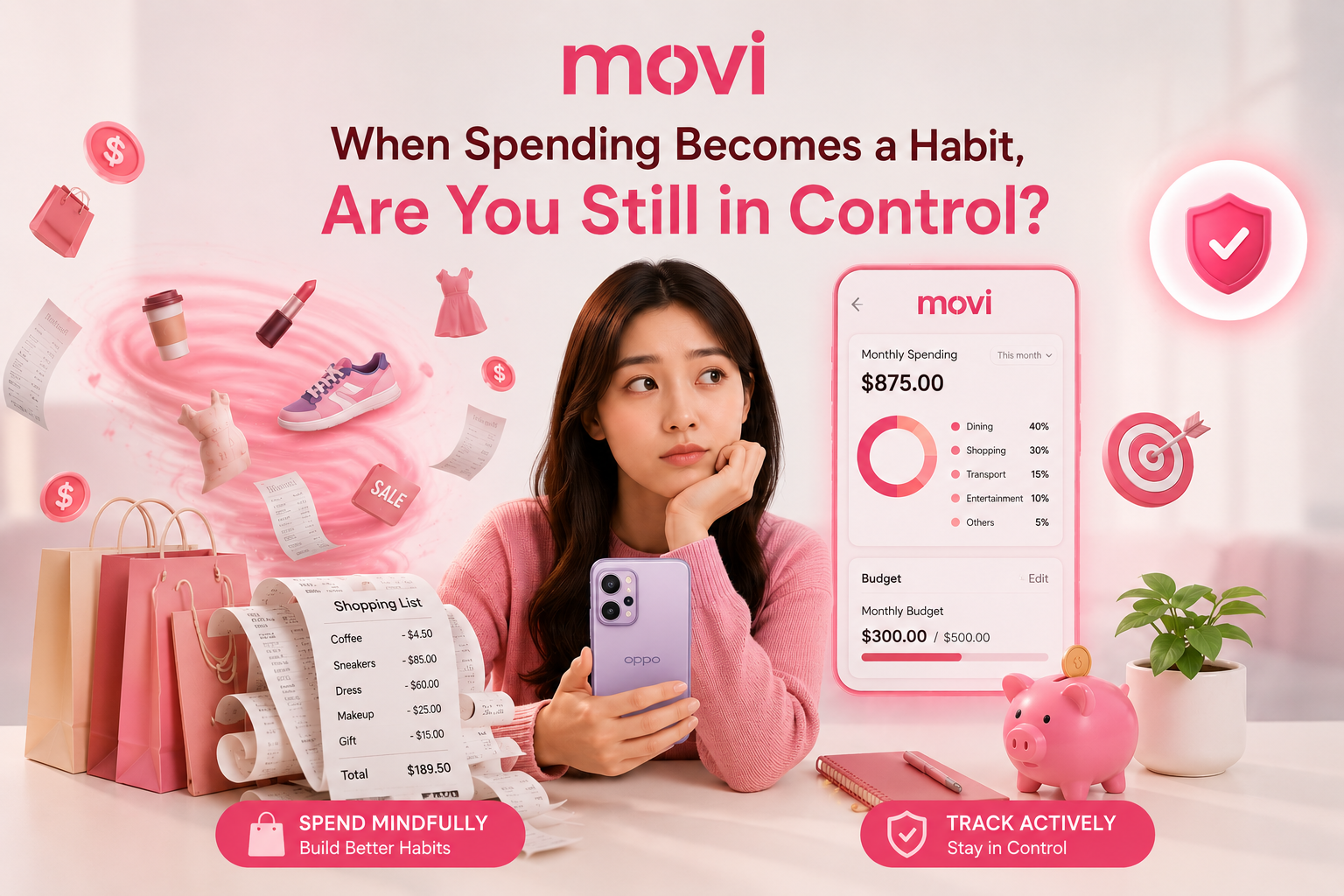
When Spending Becomes a Habit, Are You Still in Co...
15/05/2026
In the era of “one-tap” shopping, recognizing unconscious spending is an essential skill f...
See more
MOVI HAPPY NEW YEAR 2026
31/12/2025
On the occasion of New Year 2026, MOVI would like to extend our warmest wishes to our Valu...
See more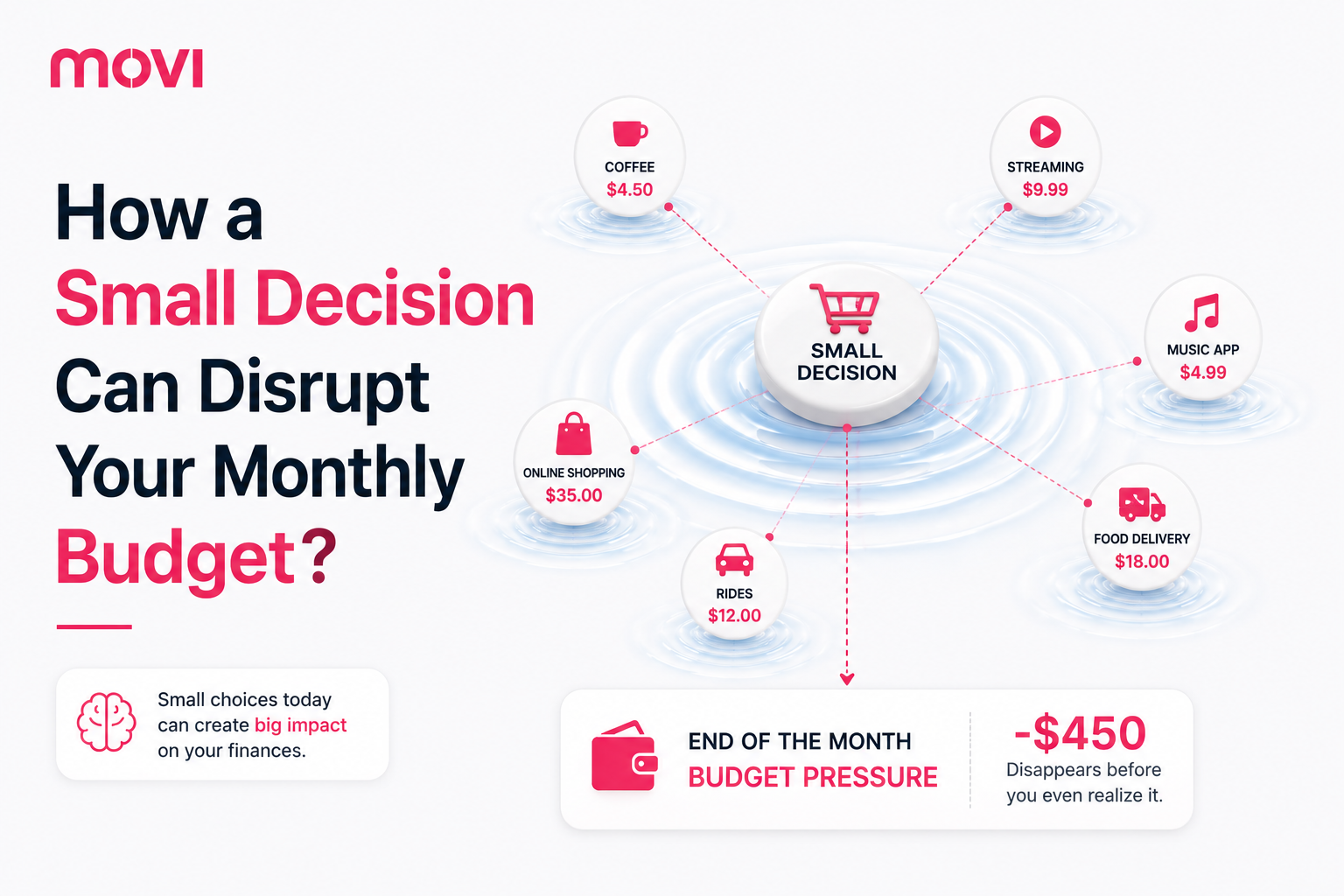
How a Small Decision Can Disrupt Your Monthly Budg...
22/05/2026
Understanding ripple effects becomes a key skill for cash flow management, especially when...
See more
HOW TO CHOOSE THE RIGHT PAYMENT PLAN TO USE BNPL E...
24/04/2026
In recent years, BNPL (Buy Now Pay Later) has become an increasingly popular financial sol...
See more
Viet Phu Payment Services Support Corporation
This website is established for the purpose of introducing MOVI Benefits Program deployed by Viet Phu and it's partners including but not limited to introduce the Partner, the goods, services sold in MOVI Benefits Program.


